
Menu close
X
Menu close
X

1

2

3
4
5
Voices
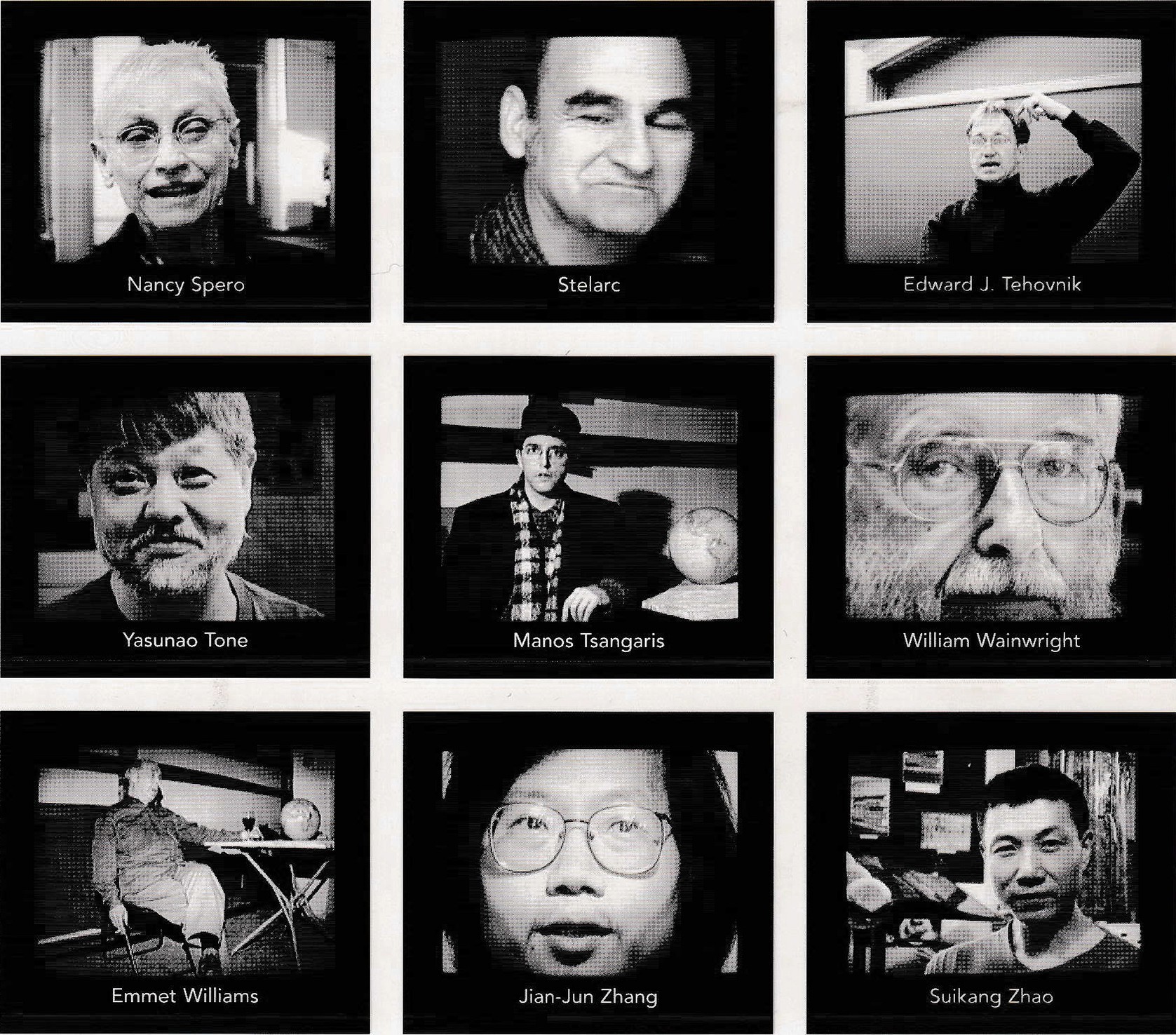
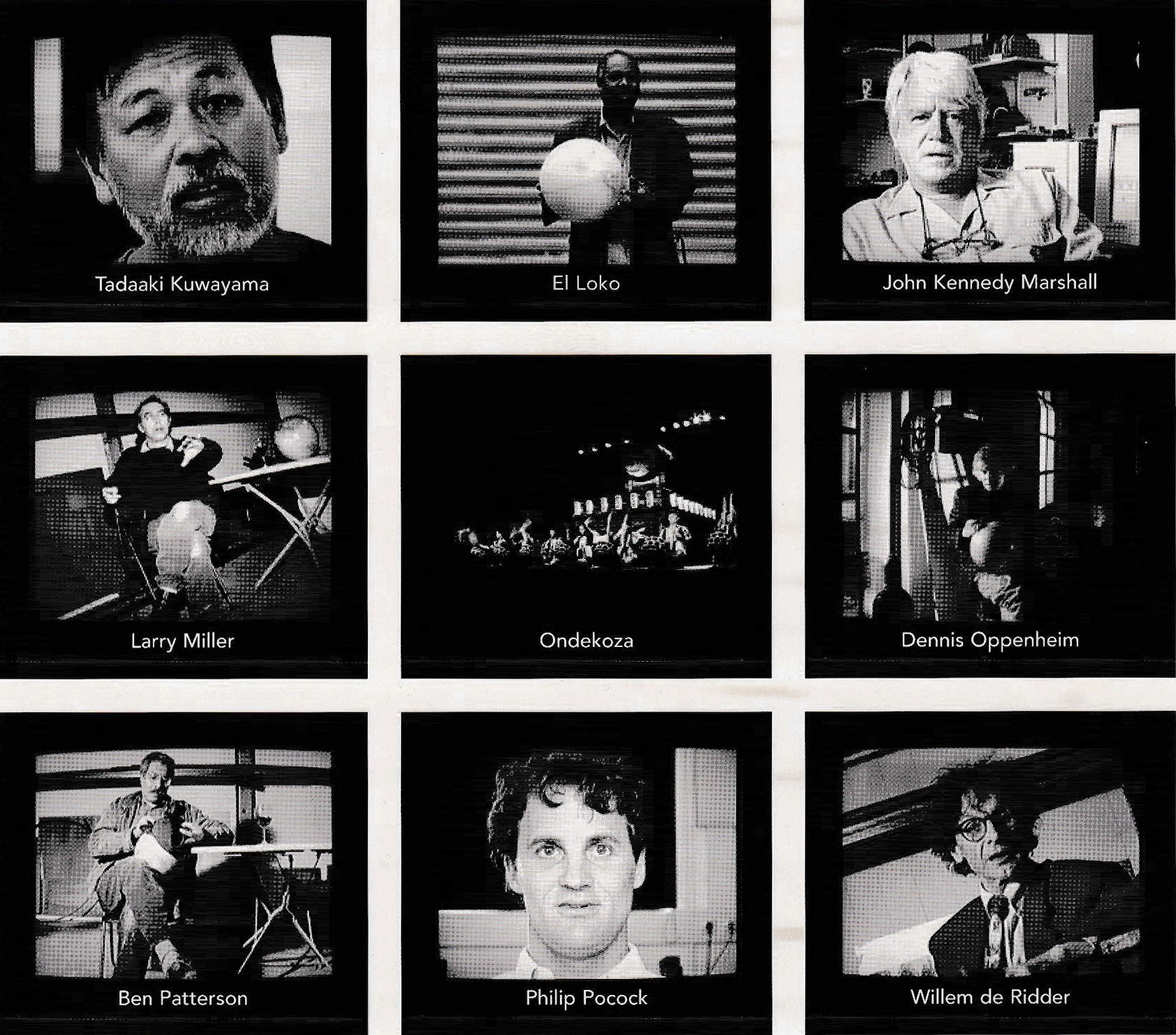
Video portraits of 50 artists and scientists from a wide range of cultures. Recorded by Markus Heinsdorff in Munich, Berlin, New York and Boston, USA, there at the Massachusetts Institute of Technology. The portraits vary in length, from a few minutes to over an hour. The project places art and science, different forms of creativity and the common ground between cultures side by side. The individual voices combine into a polyphonic picture of stories, ideas and visions about cultures, habitats and connections in the world – with people at the centre. The contributions range from brain research and robotics in science to the most diverse fields of art.
Everyone who had opened their Fluxus exhibition in Munich in 1993 was asked by Markus Heinsdorff for a contribution. The recordings were made in his workshop with the help of camera operators who were friends of his. The theme and the form attracted interest and became the starting point for the collection of portraits. After Munich and Berlin in 1993/1994, Heinsdorff portrayed artists and scientists from many different parts of the world living in New York and Boston with a handheld video camera in spring 1995. Among them were contributions by Christo and Jeanne-Claude, who at that time were preparing Wrapped Reichstag, and by the photographer Ellen Auerbach, who at that time, at over 80 years of age, was gaining international recognition.
Exhibition
Under the title “Stones & Voices”, the portraits were shown as an exhibition for several months in 1995 at the Stiftung für konkrete Kunst, Reutlingen (1987–2017). With its international focus, the institution for concrete and constructive art presented works by national and international artists in its collection and exhibition programme. “Stones & Voices” at the same time brought the works into a dialogue with concrete art and extended its context to include the themes of people, nature and technology.
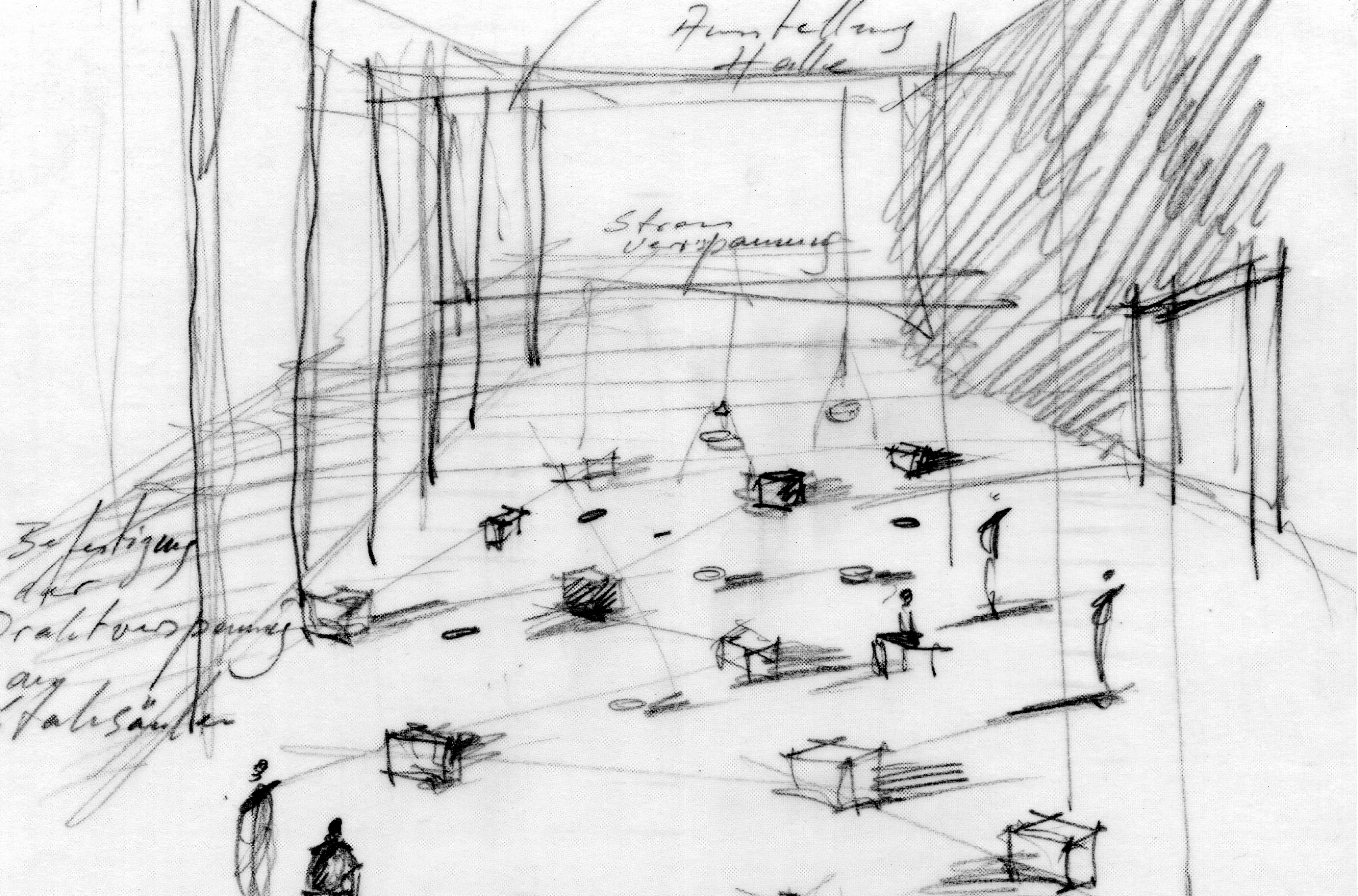
Each “voice” was given its own monitor in the form of a reconditioned standard television set with a playback device. These were spread across 250 m² of floor space in a large industrial hall of a former machine factory, the home of the Stiftung für konkrete Kunst. All contributions were played simultaneously, creating a polyphonic sound space that visitors could walk through. Each “voice” could also be listened to individually on headphones at the sets.
Opposite was an installation by the artist Martin Rosenthal, in which 100 water-filled bowls stood on several rows of plinths. In them lay rare stones (Rain Flower) with a special, partly luminous colour structure from the Yangtze, the longest river in China. The joint exhibition thus also created a field of tension between “people and technology, people and nature”, between “loud and quiet”.
Collaboration
Many of the contacts with the artists in the USA were arranged by the independent curator Ira Stehmann, now director of the Ira Stehmann Fine Art (ISFA) gallery in Munich.
The exhibition at the Stiftung für konkrete Kunst was curated by the two directors of the foundation, Gabriele Kübler and Manfred Wandel.
The portrait photographs were taken directly from the television monitors.
List of participants with places/origin and profession | PDF
Fig. 1: Eric Andersen, Copenhagen; Arakawa + Madeline Gins, NY; Ellen Auerbach, NY; Ay-O, Tokyo and NY; Şükran Aziz, NY; Lillian Bassman, NY; Bing Hu, NY; Jonathan Borofsky, Ogunquit, Maine; Mathieu Carrière, NY
Fig. 2: Christo and Jeanne-Claude, NY; Philip Corner, NY; İpek Duben, NY; Jean Dupuy, Pierrefeu, France; David Durlach, Boston; Suzan Frecon, NY; Sara Garden Armstrong, NY; Richard Gardner, Boston, Massachusetts; Clayton George, NY
Fig. 3: Leon Golub, NY; Jon Groom, Munich; Alfred Earl (Al) Hansen, NY; Geoffrey Hendricks, NY; David Higginbottom, NY; Derrick de Kerckhove, Toronto, Canada; Alison Knowles, NY; Gabriel Koren, NY; Toshinori Kuga, NY
Fig. 4: Nancy Spero, NY; Stelarc (Stelios Arcadiou), West Melton, Australia; Edward J. Tehovnik, Boston, Massachusetts; Yasunao Tone, NY; Manos Tsangaris, Düsseldorf; William Wainwright, Boston, Massachusetts; Emmet Williams, Berlin; Jian-Jun Zhang, NY; Suikang Zhao, NY
Fig. 5: Tadaaki Kuwayama, NY; El Loko, Duisburg; John Kennedy Marshall, Peterborough, New Hampshire; Larry Miller, NY and Pennsylvania; Ondekoza, Nagasaki, Japan; Dennis Oppenheim, NY; Ben Patterson, NY; Philip Pocock; Willem de Ridder, USA
Further participants: Timothy Anderson, Cambridge, Massachusetts; Robert Kushner, NY; Geert Lovink, place of residence not given; Rakuko Naito, NY; Aleksandar Rasic, NY; Noemi Smolik, Berlin and Prague; Zadik Zadikian, NY
1
2
3
4
5
Voices
Video portraits of 50 artists and scientists from a wide range of cultures. Recorded by Markus Heinsdorff in Munich, Berlin, New York and Boston, USA, there at the Massachusetts Institute of Technology. The portraits vary in length, from a few minutes to over an hour. The project places art and science, different forms of creativity and the common ground between cultures side by side. The individual voices combine into a polyphonic picture of stories, ideas and visions about cultures, habitats and connections in the world – with people at the centre. The contributions range from brain research and robotics in science to the most diverse fields of art.
Everyone who had opened their Fluxus exhibition in Munich in 1993 was asked by Markus Heinsdorff for a contribution. The recordings were made in his workshop with the help of camera operators who were friends of his. The theme and the form attracted interest and became the starting point for the collection of portraits. After Munich and Berlin in 1993/1994, Heinsdorff portrayed artists and scientists from many different parts of the world living in New York and Boston with a handheld video camera in spring 1995. Among them were contributions by Christo and Jeanne-Claude, who at that time were preparing Wrapped Reichstag, and by the photographer Ellen Auerbach, who at that time, at over 80 years of age, was gaining international recognition.
Exhibition
Under the title “Stones & Voices”, the portraits were shown as an exhibition for several months in 1995 at the Stiftung für konkrete Kunst, Reutlingen (1987–2017). With its international focus, the institution for concrete and constructive art presented works by national and international artists in its collection and exhibition programme. “Stones & Voices” at the same time brought the works into a dialogue with concrete art and extended its context to include the themes of people, nature and technology.
Each “voice” was given its own monitor in the form of a reconditioned standard television set with a playback device. These were spread across 250 m² of floor space in a large industrial hall of a former machine factory, the home of the Stiftung für konkrete Kunst. All contributions were played simultaneously, creating a polyphonic sound space that visitors could walk through. Each “voice” could also be listened to individually on headphones at the sets.
Opposite was an installation by the artist Martin Rosenthal, in which 100 water-filled bowls stood on several rows of plinths. In them lay rare stones (Rain Flower) with a special, partly luminous colour structure from the Yangtze, the longest river in China. The joint exhibition thus also created a field of tension between “people and technology, people and nature”, between “loud and quiet”.
Collaboration
Many of the contacts with the artists in the USA were arranged by the independent curator Ira Stehmann, now director of the Ira Stehmann Fine Art (ISFA) gallery in Munich.
The exhibition at the Stiftung für konkrete Kunst was curated by the two directors of the foundation, Gabriele Kübler and Manfred Wandel.
The portrait photographs were taken directly from the television monitors.
List of participants with places/origin and profession | PDF
Fig. 1: Eric Andersen, Copenhagen; Arakawa + Madeline Gins, NY; Ellen Auerbach, NY; Ay-O, Tokyo and NY; Şükran Aziz, NY; Lillian Bassman, NY; Bing Hu, NY; Jonathan Borofsky, Ogunquit, Maine; Mathieu Carrière, NY
Fig. 2: Christo and Jeanne-Claude, NY; Philip Corner, NY; İpek Duben, NY; Jean Dupuy, Pierrefeu, France; David Durlach, Boston; Suzan Frecon, NY; Sara Garden Armstrong, NY; Richard Gardner, Boston, Massachusetts; Clayton George, NY
Fig. 3: Leon Golub, NY; Jon Groom, Munich; Alfred Earl (Al) Hansen, NY; Geoffrey Hendricks, NY; David Higginbottom, NY; Derrick de Kerckhove, Toronto, Canada; Alison Knowles, NY; Gabriel Koren, NY; Toshinori Kuga, NY
Fig. 4: Nancy Spero, NY; Stelarc (Stelios Arcadiou), West Melton, Australia; Edward J. Tehovnik, Boston, Massachusetts; Yasunao Tone, NY; Manos Tsangaris, Düsseldorf; William Wainwright, Boston, Massachusetts; Emmet Williams, Berlin; Jian-Jun Zhang, NY; Suikang Zhao, NY
Fig. 5: Tadaaki Kuwayama, NY; El Loko, Duisburg; John Kennedy Marshall, Peterborough, New Hampshire; Larry Miller, NY and Pennsylvania; Ondekoza, Nagasaki, Japan; Dennis Oppenheim, NY; Ben Patterson, NY; Philip Pocock; Willem de Ridder, USA
Further participants: Timothy Anderson, Cambridge, Massachusetts; Robert Kushner, NY; Geert Lovink, place of residence not given; Rakuko Naito, NY; Aleksandar Rasic, NY; Noemi Smolik, Berlin and Prague; Zadik Zadikian, NY
1
2
3
4
5
Voices
Video portraits of 50 artists and scientists from a wide range of cultures. Recorded by Markus Heinsdorff in Munich, Berlin, New York and Boston, USA, there at the Massachusetts Institute of Technology. The portraits vary in length, from a few minutes to over an hour. The project places art and science, different forms of creativity and the common ground between cultures side by side. The individual voices combine into a polyphonic picture of stories, ideas and visions about cultures, habitats and connections in the world – with people at the centre. The contributions range from brain research and robotics in science to the most diverse fields of art.
Everyone who had opened their Fluxus exhibition in Munich in 1993 was asked by Markus Heinsdorff for a contribution. The recordings were made in his workshop with the help of camera operators who were friends of his. The theme and the form attracted interest and became the starting point for the collection of portraits. After Munich and Berlin in 1993/1994, Heinsdorff portrayed artists and scientists from many different parts of the world living in New York and Boston with a handheld video camera in spring 1995. Among them were contributions by Christo and Jeanne-Claude, who at that time were preparing Wrapped Reichstag, and by the photographer Ellen Auerbach, who at that time, at over 80 years of age, was gaining international recognition.
Exhibition
Under the title “Stones & Voices”, the portraits were shown as an exhibition for several months in 1995 at the Stiftung für konkrete Kunst, Reutlingen (1987–2017). With its international focus, the institution for concrete and constructive art presented works by national and international artists in its collection and exhibition programme. “Stones & Voices” at the same time brought the works into a dialogue with concrete art and extended its context to include the themes of people, nature and technology.
Each “voice” was given its own monitor in the form of a reconditioned standard television set with a playback device. These were spread across 250 m² of floor space in a large industrial hall of a former machine factory, the home of the Stiftung für konkrete Kunst. All contributions were played simultaneously, creating a polyphonic sound space that visitors could walk through. Each “voice” could also be listened to individually on headphones at the sets.
Opposite was an installation by the artist Martin Rosenthal, in which 100 water-filled bowls stood on several rows of plinths. In them lay rare stones (Rain Flower) with a special, partly luminous colour structure from the Yangtze, the longest river in China. The joint exhibition thus also created a field of tension between “people and technology, people and nature”, between “loud and quiet”.
Collaboration
Many of the contacts with the artists in the USA were arranged by the independent curator Ira Stehmann, now director of the Ira Stehmann Fine Art (ISFA) gallery in Munich.
The exhibition at the Stiftung für konkrete Kunst was curated by the two directors of the foundation, Gabriele Kübler and Manfred Wandel.
The portrait photographs were taken directly from the television monitors.
List of participants with places/origin and profession | PDF
Fig. 1: Eric Andersen, Copenhagen; Arakawa + Madeline Gins, NY; Ellen Auerbach, NY; Ay-O, Tokyo and NY; Şükran Aziz, NY; Lillian Bassman, NY; Bing Hu, NY; Jonathan Borofsky, Ogunquit, Maine; Mathieu Carrière, NY
Fig. 2: Christo and Jeanne-Claude, NY; Philip Corner, NY; İpek Duben, NY; Jean Dupuy, Pierrefeu, France; David Durlach, Boston; Suzan Frecon, NY; Sara Garden Armstrong, NY; Richard Gardner, Boston, Massachusetts; Clayton George, NY
Fig. 3: Leon Golub, NY; Jon Groom, Munich; Alfred Earl (Al) Hansen, NY; Geoffrey Hendricks, NY; David Higginbottom, NY; Derrick de Kerckhove, Toronto, Canada; Alison Knowles, NY; Gabriel Koren, NY; Toshinori Kuga, NY
Fig. 4: Nancy Spero, NY; Stelarc (Stelios Arcadiou), West Melton, Australia; Edward J. Tehovnik, Boston, Massachusetts; Yasunao Tone, NY; Manos Tsangaris, Düsseldorf; William Wainwright, Boston, Massachusetts; Emmet Williams, Berlin; Jian-Jun Zhang, NY; Suikang Zhao, NY
Fig. 5: Tadaaki Kuwayama, NY; El Loko, Duisburg; John Kennedy Marshall, Peterborough, New Hampshire; Larry Miller, NY and Pennsylvania; Ondekoza, Nagasaki, Japan; Dennis Oppenheim, NY; Ben Patterson, NY; Philip Pocock; Willem de Ridder, USA
Further participants: Timothy Anderson, Cambridge, Massachusetts; Robert Kushner, NY; Geert Lovink, place of residence not given; Rakuko Naito, NY; Aleksandar Rasic, NY; Noemi Smolik, Berlin and Prague; Zadik Zadikian, NY
1
2
3
4
5
Voices
Video portraits of 50 artists and scientists from a wide range of cultures. Recorded by Markus Heinsdorff in Munich, Berlin, New York and Boston, USA, there at the Massachusetts Institute of Technology. The portraits vary in length, from a few minutes to over an hour. The project places art and science, different forms of creativity and the common ground between cultures side by side. The individual voices combine into a polyphonic picture of stories, ideas and visions about cultures, habitats and connections in the world – with people at the centre. The contributions range from brain research and robotics in science to the most diverse fields of art.
Everyone who had opened their Fluxus exhibition in Munich in 1993 was asked by Markus Heinsdorff for a contribution. The recordings were made in his workshop with the help of camera operators who were friends of his. The theme and the form attracted interest and became the starting point for the collection of portraits. After Munich and Berlin in 1993/1994, Heinsdorff portrayed artists and scientists from many different parts of the world living in New York and Boston with a handheld video camera in spring 1995. Among them were contributions by Christo and Jeanne-Claude, who at that time were preparing Wrapped Reichstag, and by the photographer Ellen Auerbach, who at that time, at over 80 years of age, was gaining international recognition.
Exhibition
Under the title “Stones & Voices”, the portraits were shown as an exhibition for several months in 1995 at the Stiftung für konkrete Kunst, Reutlingen (1987–2017). With its international focus, the institution for concrete and constructive art presented works by national and international artists in its collection and exhibition programme. “Stones & Voices” at the same time brought the works into a dialogue with concrete art and extended its context to include the themes of people, nature and technology.
Each “voice” was given its own monitor in the form of a reconditioned standard television set with a playback device. These were spread across 250 m² of floor space in a large industrial hall of a former machine factory, the home of the Stiftung für konkrete Kunst. All contributions were played simultaneously, creating a polyphonic sound space that visitors could walk through. Each “voice” could also be listened to individually on headphones at the sets.
Opposite was an installation by the artist Martin Rosenthal, in which 100 water-filled bowls stood on several rows of plinths. In them lay rare stones (Rain Flower) with a special, partly luminous colour structure from the Yangtze, the longest river in China. The joint exhibition thus also created a field of tension between “people and technology, people and nature”, between “loud and quiet”.
Collaboration
Many of the contacts with the artists in the USA were arranged by the independent curator Ira Stehmann, now director of the Ira Stehmann Fine Art (ISFA) gallery in Munich.
The exhibition at the Stiftung für konkrete Kunst was curated by the two directors of the foundation, Gabriele Kübler and Manfred Wandel.
The portrait photographs were taken directly from the television monitors.
List of participants with places/origin and profession | PDF
Fig. 1: Eric Andersen, Copenhagen; Arakawa + Madeline Gins, NY; Ellen Auerbach, NY; Ay-O, Tokyo and NY; Şükran Aziz, NY; Lillian Bassman, NY; Bing Hu, NY; Jonathan Borofsky, Ogunquit, Maine; Mathieu Carrière, NY
Fig. 2: Christo and Jeanne-Claude, NY; Philip Corner, NY; İpek Duben, NY; Jean Dupuy, Pierrefeu, France; David Durlach, Boston; Suzan Frecon, NY; Sara Garden Armstrong, NY; Richard Gardner, Boston, Massachusetts; Clayton George, NY
Fig. 3: Leon Golub, NY; Jon Groom, Munich; Alfred Earl (Al) Hansen, NY; Geoffrey Hendricks, NY; David Higginbottom, NY; Derrick de Kerckhove, Toronto, Canada; Alison Knowles, NY; Gabriel Koren, NY; Toshinori Kuga, NY
Fig. 4: Nancy Spero, NY; Stelarc (Stelios Arcadiou), West Melton, Australia; Edward J. Tehovnik, Boston, Massachusetts; Yasunao Tone, NY; Manos Tsangaris, Düsseldorf; William Wainwright, Boston, Massachusetts; Emmet Williams, Berlin; Jian-Jun Zhang, NY; Suikang Zhao, NY
Fig. 5: Tadaaki Kuwayama, NY; El Loko, Duisburg; John Kennedy Marshall, Peterborough, New Hampshire; Larry Miller, NY and Pennsylvania; Ondekoza, Nagasaki, Japan; Dennis Oppenheim, NY; Ben Patterson, NY; Philip Pocock; Willem de Ridder, USA
Further participants: Timothy Anderson, Cambridge, Massachusetts; Robert Kushner, NY; Geert Lovink, place of residence not given; Rakuko Naito, NY; Aleksandar Rasic, NY; Noemi Smolik, Berlin and Prague; Zadik Zadikian, NY

Fig. left: Exhibition hall of the Stiftung für konkrete Kunst, Reutlingen.
Fig. left and below: 50 monitors/television sets on the hall floor.

Fig. left: Exhibition hall of the Stiftung für konkrete Kunst, Reutlingen.
Fig. left and below: 50 monitors/television sets on the hall floor.
Fig. left: Exhibition hall of the Stiftung für konkrete Kunst, Reutlingen.
Fig. left and below: 50 monitors/television sets on the hall floor.
Fig. left: Exhibition hall of the Stiftung für konkrete Kunst, Reutlingen.
Fig. left and below: 50 monitors/television sets on the hall floor.
©
2026
Markus Heinsdorff Copyright.
©
2026
Markus Heinsdorff Copyright.
©
2026
Markus Heinsdorff Copyright.
©
2026
Markus Heinsdorff Copyright.