
Menu close
X

Kunstarchiv der Bäume und Pflanzen
Portraits of trees and plants, and in part also of their inhabitants, which Markus Heinsdorff has taken in a wide range of regions of the world and assembled into an impressive “panorama” of nature.
They take the viewer to South America and Asia, into the forests of the Panguana insect research station in Peru, to the Achuar Indigenous people in the Amazon region of Ecuador or to excavated jungle giants in northern Thailand. Leaving the cloud forests
of the Himalayan region in north-east India, the journey continues to Europe, into the Anaga mountain rainforest on Tenerife, and from there to North America, to the mangrove forests of the vast, species-rich Everglades wetlands in Florida.
All the images are part of the artist’s species archive of trees and plants, which determine the climate in the tropics as well as the climate of the entire planet. The overwhelming and at times exuberant diversity of forms and plays of colour in flora and fauna stands in stark contrast to human intervention in their environment.
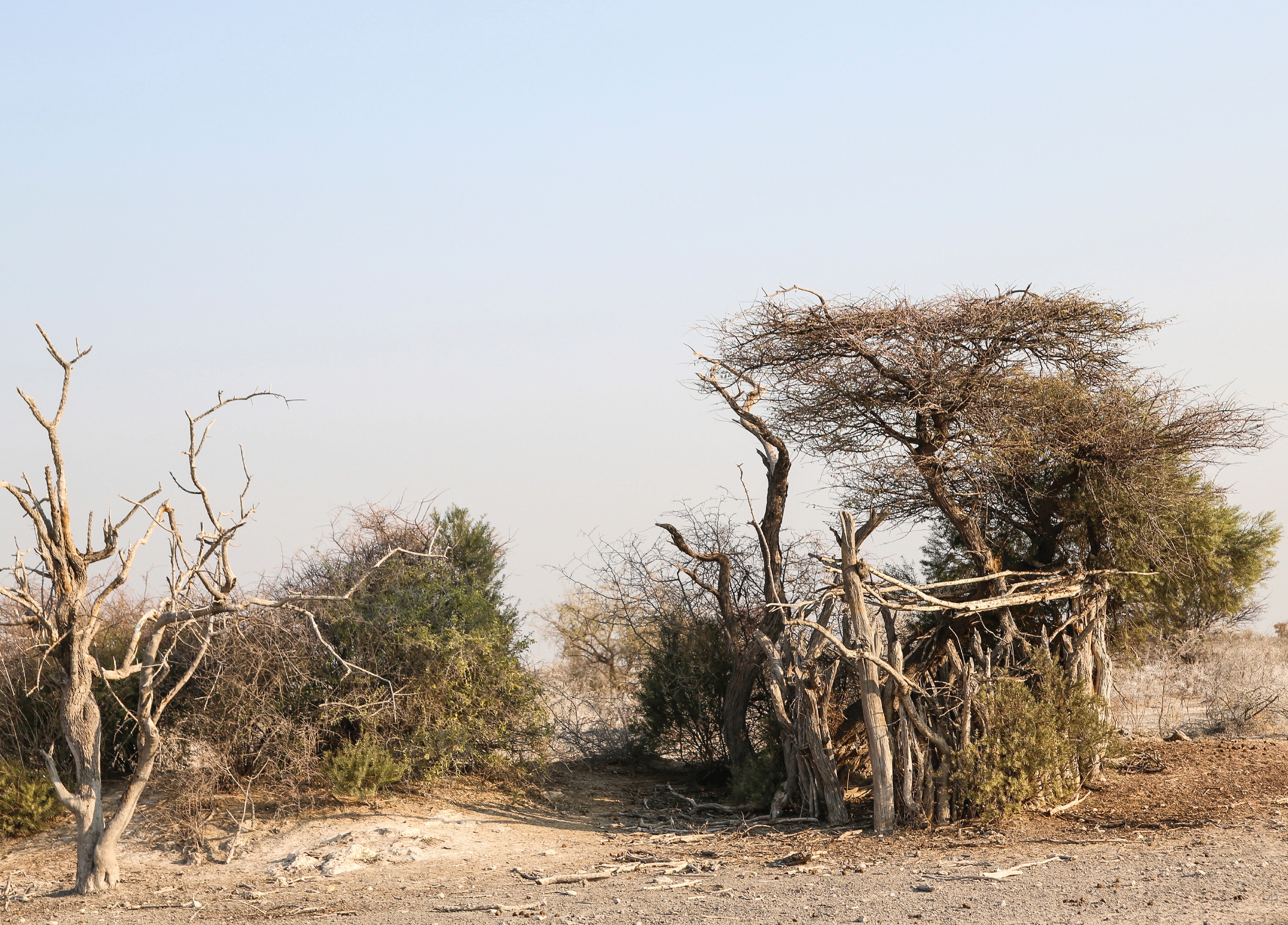
The profound change in nature that goes hand in hand with this can be seen in the images of a dead forest in the desert of Namibia, or in the documentation of plants which, in desert or rocky regions, can only exist as extreme survival artists brought forth by evolution.
Exhibitions
“Regen–Wald III”, Space Lab, Terminal 2, Munich Airport, 2023/2024
“Regen–Wald I”, House of Photography, Burghausen, 2022

14
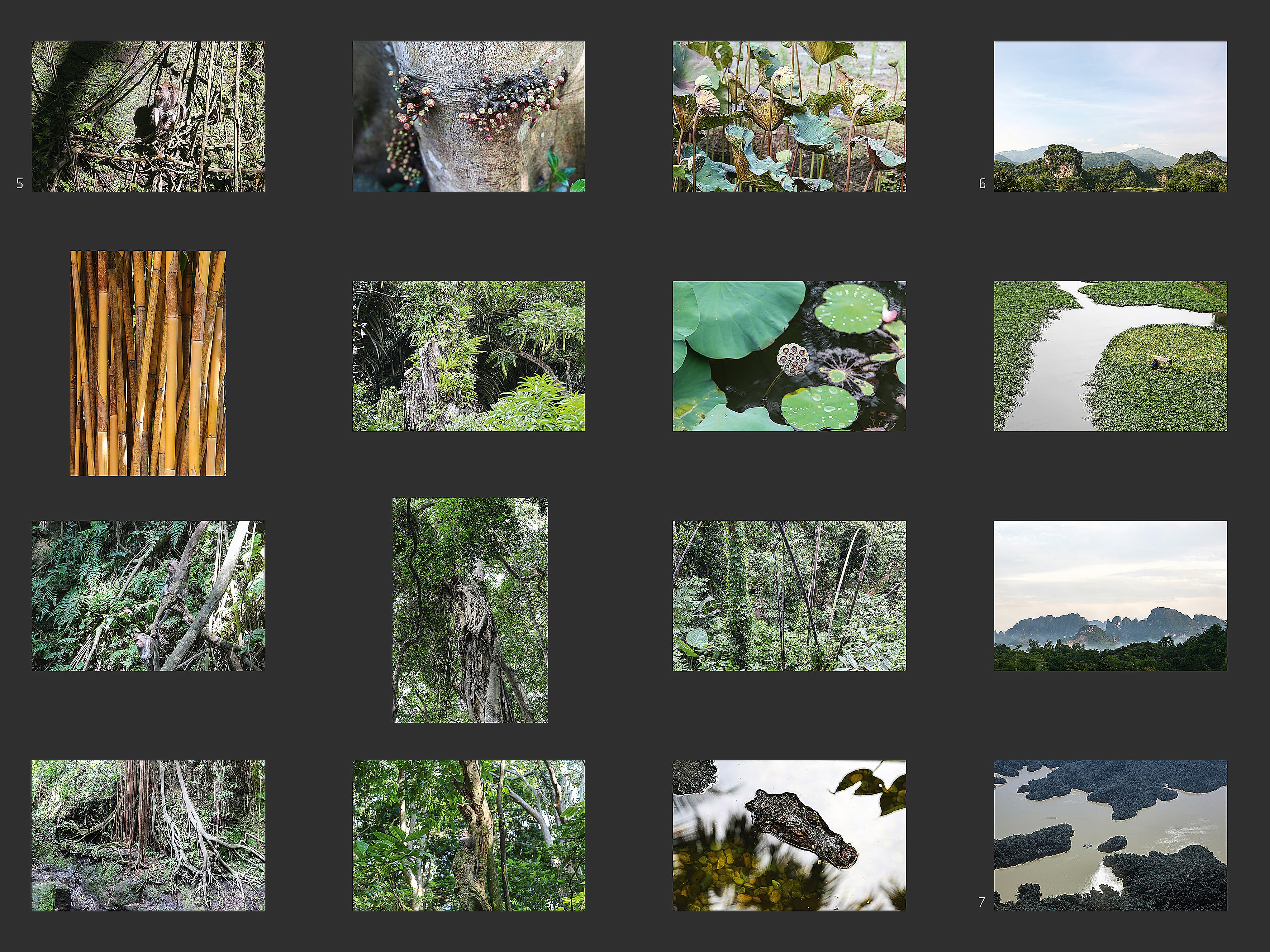
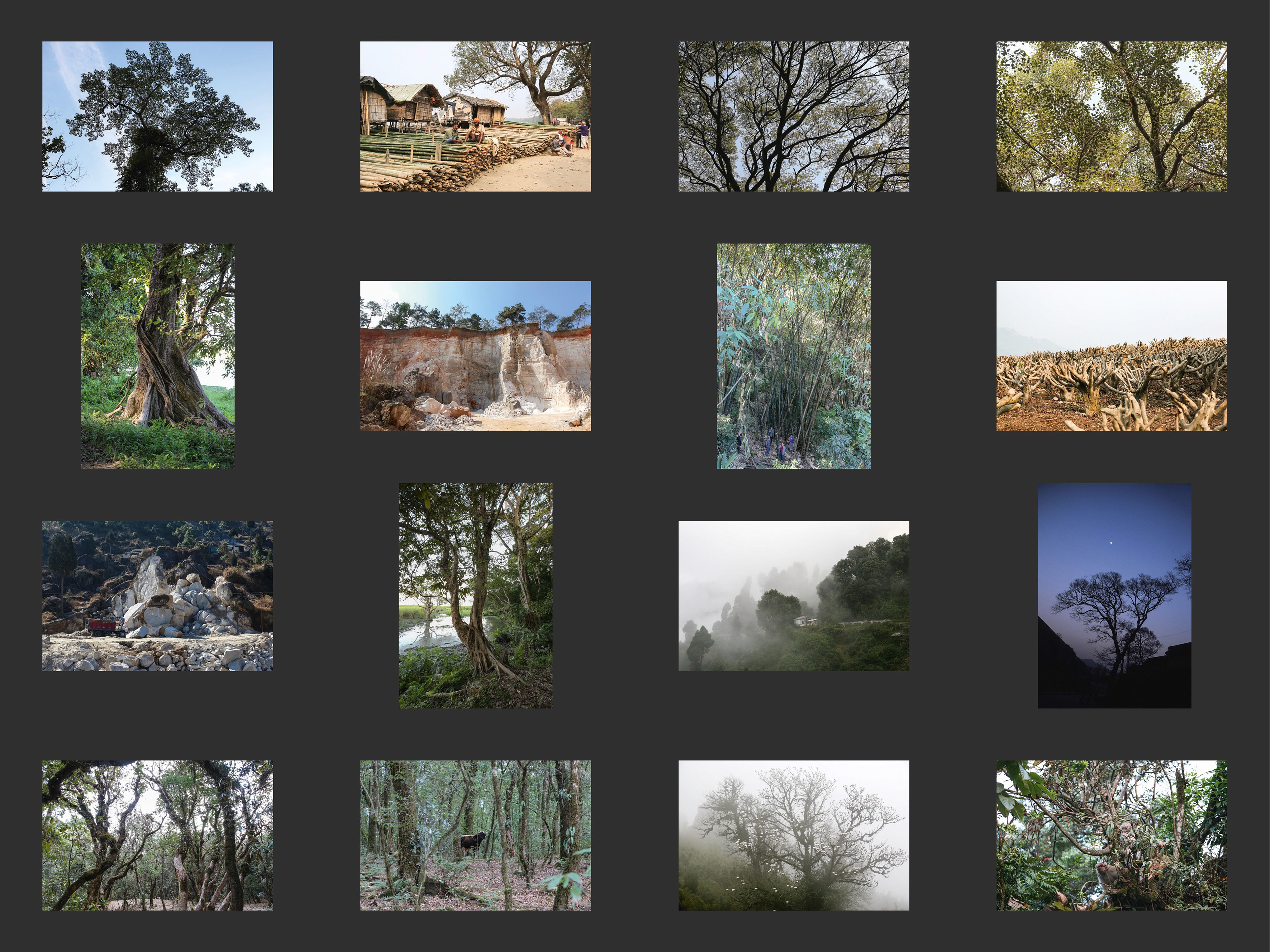
Figures: excerpts from the 320 portraits of trees, plants and their inhabitants.
Fig. top: morning mist in the tropical forest on the slope of the Ngorongoro Crater in Tanzania.
Fig. left (14): tree crown with a Zanzibar red colobus, an endangered species endemic to Zanzibar, in Jozani Chwaka Bay National Park – at 50 square kilometres the island’s only national park.
15
Fig. left (15): group of leafy and partly bizarre-looking dead trees in the savannah landscape of central Namibia in Africa.
15
Fig. left (15): group of leafy and partly bizarre-looking dead trees in the savannah landscape of central Namibia in Africa.
15
Fig. left (15): group of leafy and partly bizarre-looking dead trees in the savannah landscape of central Namibia in Africa.
The collection of 320 photographs (fine art prints on paper mounted on 4 mm hardboard with 20 mm spacers) in a format of 24 × 36 cm was first shown in the exhibition “Regen–Wald” at the House of Photography in 2022 and in Terminal 2 in 2023/2024.
Markus Heinsdorff took these photographs over a span of two decades of travel. Behind
them lies the idea of creating a portrait and archive of the flora and fauna, of the species and elements of the Earth. Not following a biological approach, but a purely aesthetic and formal one, owed to diversity.
Photographs/countries
Asia: 01 Japan, 02 Taiwan, 03 Philippines, 04 Java, Indonesia, 05 Bali, Indonesia, 06 Vietnam, 07 Thailand, 08 Hong Kong,
09 China, 10 India, 11 Sri Lanka; Africa: 12 South Africa, 13 Tanzania, 14 Zanzibar, Tanzania, 15 Namibia, Botswana, Zambia; Middle East: 16 Jordan, 17 Iran, 18 Oman, 19 Dubai; North Africa: 20 Tunisia; Europe: 21 Greece, 22 Croatia, 23 Italy, 24 Sicily/Italy, 25 Sardinia, Italy, 26 Austria, 27 Switzerland, 28 Germany, 29 Spain, 30 Tenerife, Spain, 31 Mallorca, Spain, 32 Lithuania, ARW, 33 Great Britain, 34 Iceland; South America: 35 Peru, 36 Ecuador, 37 Brazil; North America: 38 USA/Florida, 39 USA/New York




©
2026
Markus Heinsdorff Copyright.
©
2026
Markus Heinsdorff Copyright.
©
2026
Markus Heinsdorff Copyright.
©
2026
Markus Heinsdorff Copyright.